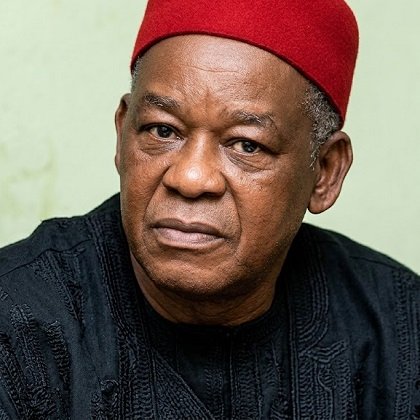
Sheikh (Dr.) Haroun Ogbonnia Ajah is a distinguished Islamic scholar, administrator, and one of the most prominent leaders of the Muslim community in Southeastern Nigeria. Renowned for his scholarship, leadership, and unwavering commitment to the development of Islam among minority Muslim populations, he stands as a central figure in the history and growth of Islam in the South-East geopolitical zone of Nigeria.
Born in 1956 in Afikpo, present-day Ebonyi State, Sheikh Ajah’s early life was marked by a strong inclination toward Islamic knowledge and community service. He pursued his educational journey across Nigeria and abroad, gaining both conventional and Islamic education. His quest for advanced Islamic scholarship led him to the prestigious Islamic University of Madinah, where he specialized in Shariah, particularly in the field of Comparative Islamic Law. This academic exposure shaped his intellectual orientation and equipped him with the tools to engage effectively with complex religious and societal issues.
Over the decades, Sheikh Ajah has distinguished himself as a leading voice of Igbo Muslims and a tireless advocate for their recognition, rights, and integration within the broader Nigerian Muslim Ummah. He has consistently emphasized that Islam transcends ethnicity, reinforcing the identity of Igbo Muslims as both authentically Igbo and fully adherent to Islamic faith and practice.
Sheikh Ajah is one of the founding members of the Supreme Council for Shariah in Nigeria, a foremost Islamic organization established to promote the implementation of Shariah for Muslims within the constitutional framework of Nigeria. As a pioneer of the Council, he has played a significant role in its expansion, advocacy efforts, and institutional consolidation, particularly in extending its reach to the Southern parts of the country where Muslims constitute a minority. His contributions have been instrumental in positioning the Council as a national platform for the articulation of Muslim concerns and aspirations.
In addition to his foundational role in SCSN, Sheikh Ajah has held several high-profile positions in national and regional Islamic bodies. He has served as Vice President-General of the Nigerian Supreme Council for Islamic Affairs, the apex Islamic body in Nigeria, where he contributed to policy formulation and national religious leadership. He also served as a Federal Commissioner at the National Hajj Commission of Nigeria, where he was actively involved in the administration and reform of Hajj operations, enhancing efficiency and service delivery for Nigerian pilgrims.
At the regional level, Sheikh Ajah has been a unifying force among Muslims in the South-East. He has served as Chairman of the South-East Muslim Elders’ Council and has played advisory and leadership roles in various Islamic organizations dedicated to Da‘wah, education, and community development. Through these platforms, he has worked tirelessly to strengthen Islamic institutions, promote religious education, and foster unity among diverse Muslim communities.
Beyond institutional leadership, Sheikh Ajah is widely respected for his advocacy of peaceful coexistence and interfaith harmony. Operating within a predominantly Christian region, he has consistently championed dialogue, mutual respect, and understanding between religious groups, thereby contributing to social stability and national cohesion.
Known for his intellectual clarity, administrative acumen, and deep sense of responsibility, Sheikh (Dr.) Haroun Ogbonnia Ajah remains a pillar of Islamic leadership in Nigeria. His legacy is firmly rooted in his pioneering efforts to advance Islam in the South-East, his role in shaping national Islamic institutions, and his enduring commitment to the unity and progress of the Nigerian Muslim Ummah.